
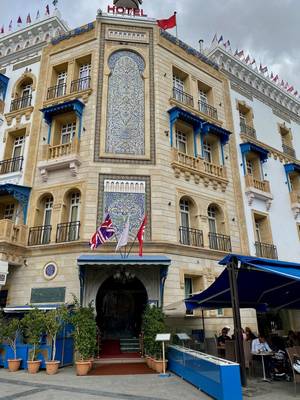
Tunisia’s history is long and complex, layered with thousands of years' worth of history and culture, which makes it one of the most fascinating countries in the world to visit. For over three millennia, it has been coveted, conquered, and re-conquered by tribes and countries seeking its fertile northern lands. Others sought its valuable position on the Mediterranean as a strategic power center in control of the maritime passage and trade between Sicily and into the eastern Mediterranean.
Dotted with the ruins of ancient civilizations, Tunisia has long been a prize for ambitious empires: the Phoenicians, Greeks, Romans, Byzantines, Ottoman Turks, Italians, and most recently, the French, who occupied Tunisia from 1881-1956. Phoenicians from today’s Lebanon were the first on record to settle on the coast – 3,000 years ago in the 10th century, B.C. Four hundred years later, their Carthage grew into a major metropolis, second in size only to Alexandria, Egypt, and dominated the western Mediterranean.
This Arab-Muslim country has a rich mixture of native and foreign influences that make up their national identity. But as a result of this mixed and shifting history, my Tunisian guide, Monaam, commented that Tunisians struggle to connect with what and who their authentic origins actually were. Every conquering group of invaders rewrote Tunisian history to their own advantage, especially the Romans.
At one time, Tunisia’s bustling capital, Tunis, was one of the greatest cities in the world. In 1609, all Muslims and Jews were expelled from Spain --- most emigrated to North Africa, with 80,000 to Tunisia. In 1846, Tunisia was one of the first countries worldwide to abolish slavery. Today, Tunis boasts a diversity of distinct cultures and a rich, complex history shaped by ages of colonization.
In subsequent posts, I will feature stops in Carthage, Dougga, Testour, Djerba, Tataouine, the Sahara Desert, and Kairouan, culminating in a daylong journey to the actual locations of my father's WWII service in Sbeitla, Faid, Sidi Bou Zid, Fondouk Pass, Sbiba, and more.
If you're an armchair traveler and/or WWII buff, I invite you to follow along.
Posted May 20, 2026

During WWII, the goal for Allied Forces during Operation TORCH, was to move east across North Africa and capture Tunis, the gateway to Sicily, Italy, and eventually, Normandy.
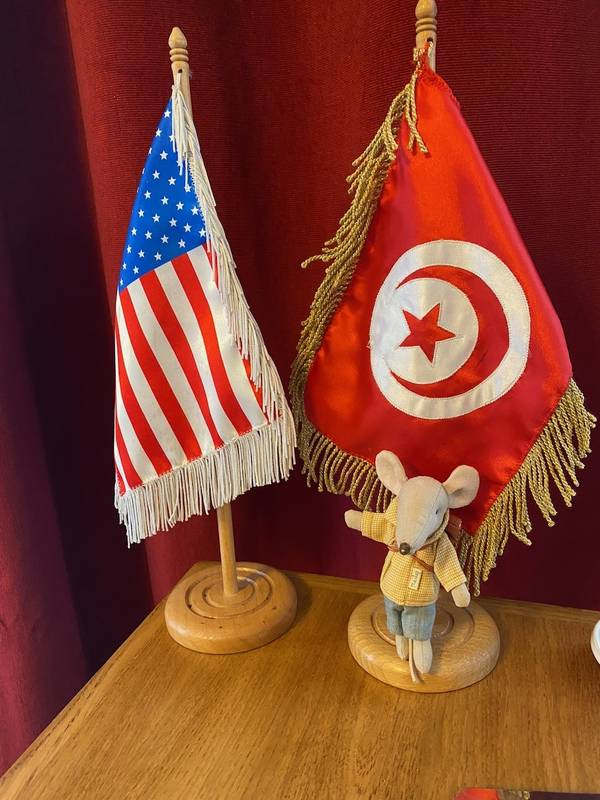
My travel companion, Marcel with the Tunisian flag.
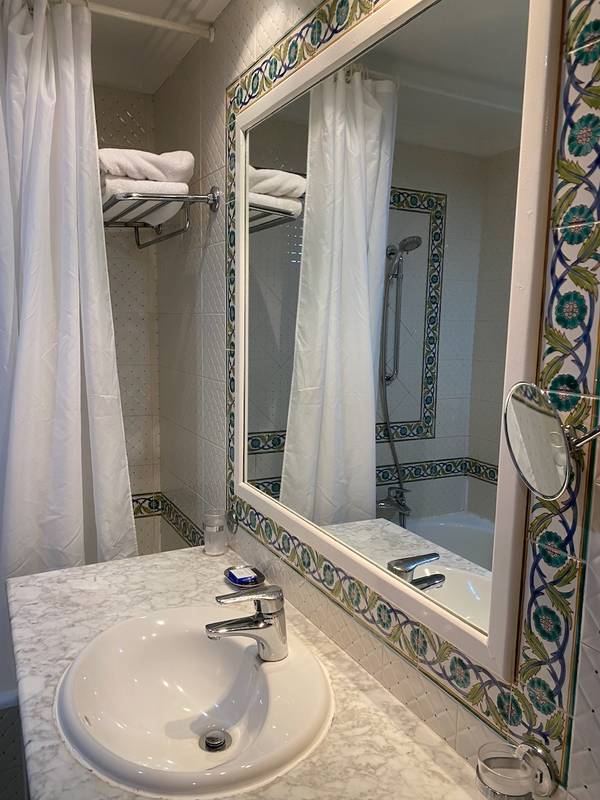
Lovely old Tunisian tiles everywhere. Tourism didn't really start in Tunisia until 1960. Before that, there were no hotels.
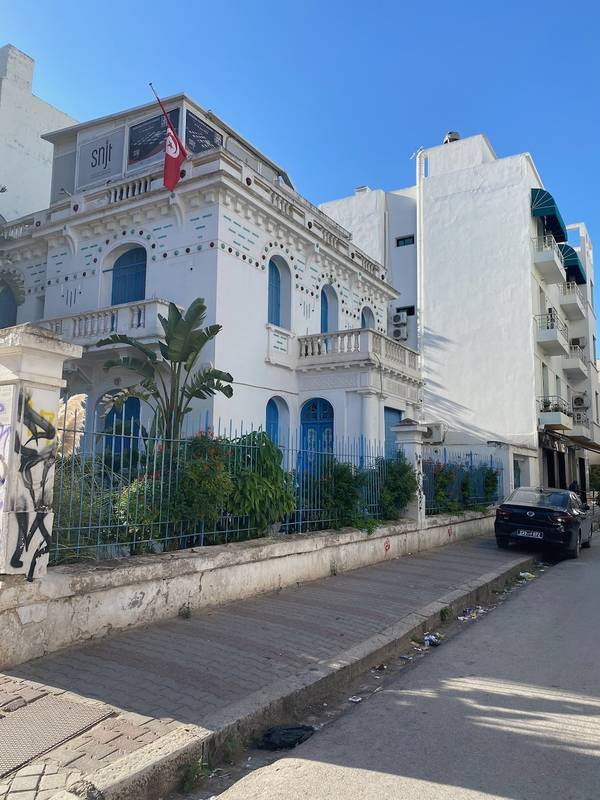
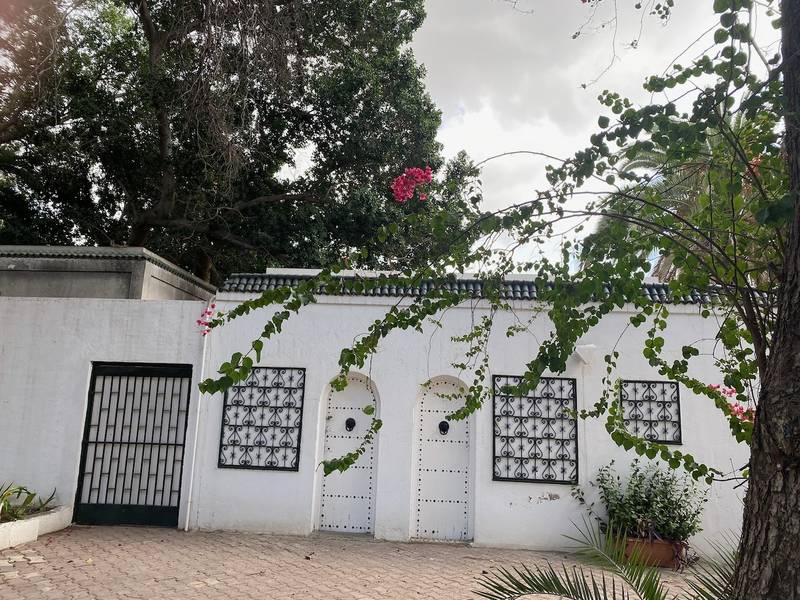
French influence in architecture.
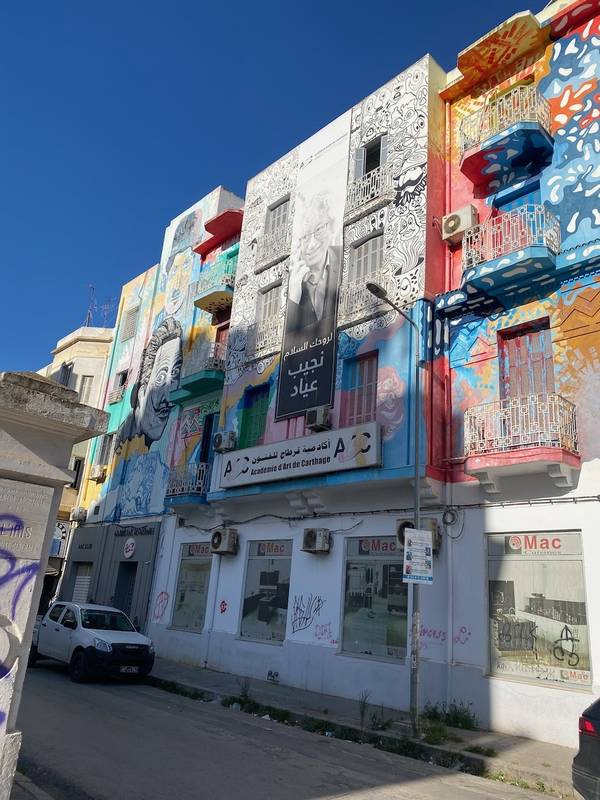
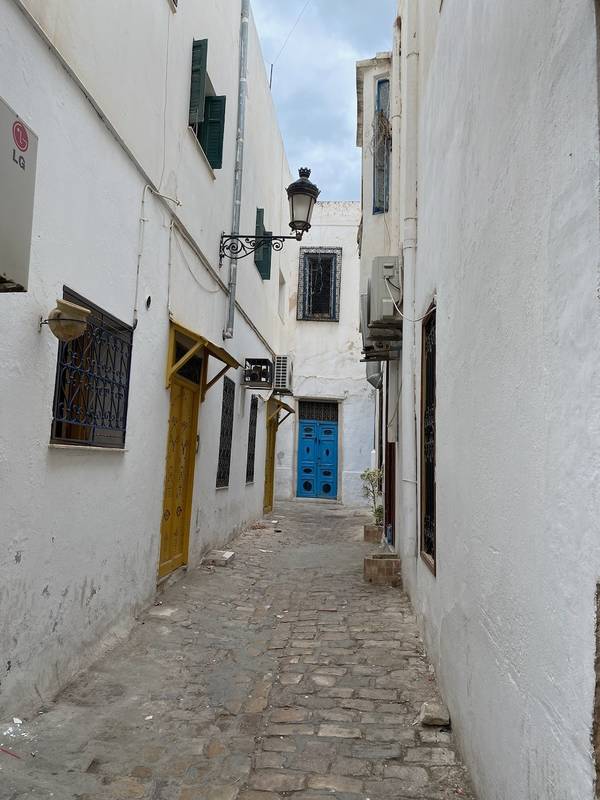
Typical street in Tunis.
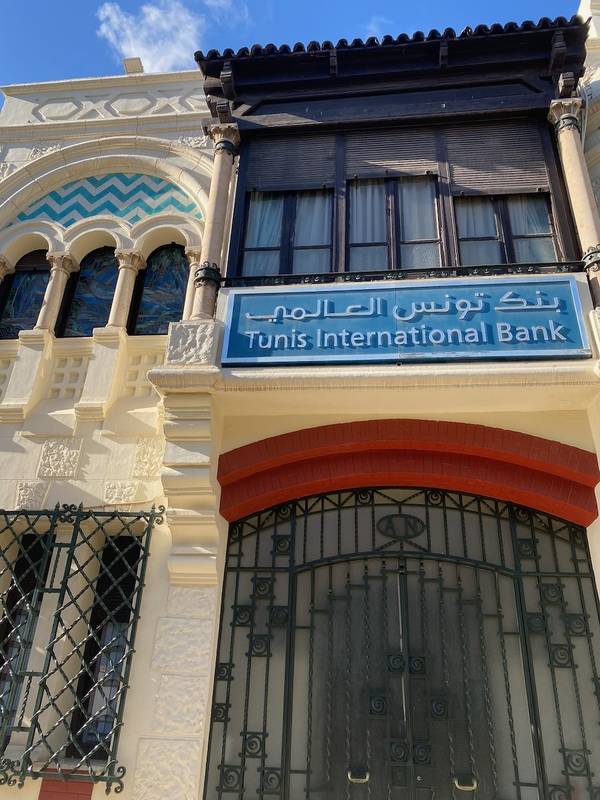
Signage in Arabic and English.
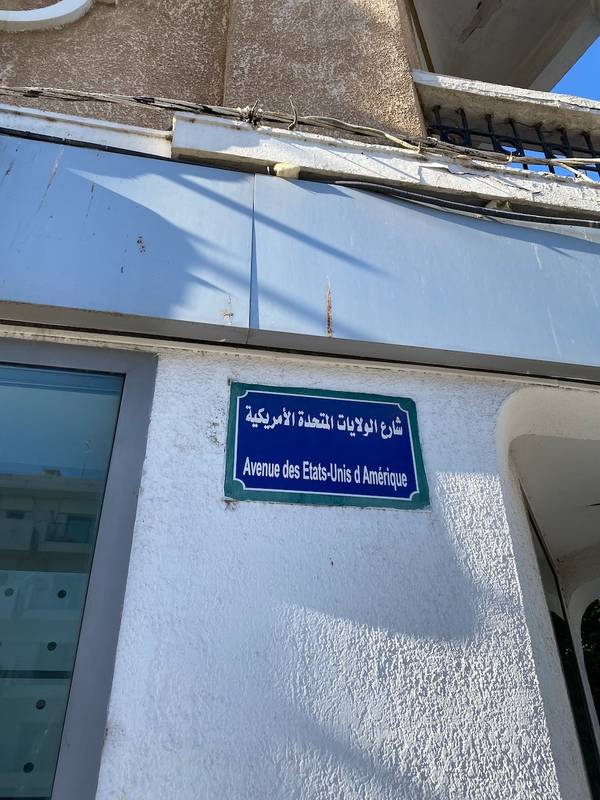
Most people speak Arabic, of course, but also French since Tunisia was a French colony for over 150 years. With increasing tourism, more and more people are speaking English, which is also taught in the schools. However, English is usually not spoken in the home, and thus not well practiced or reinforced.
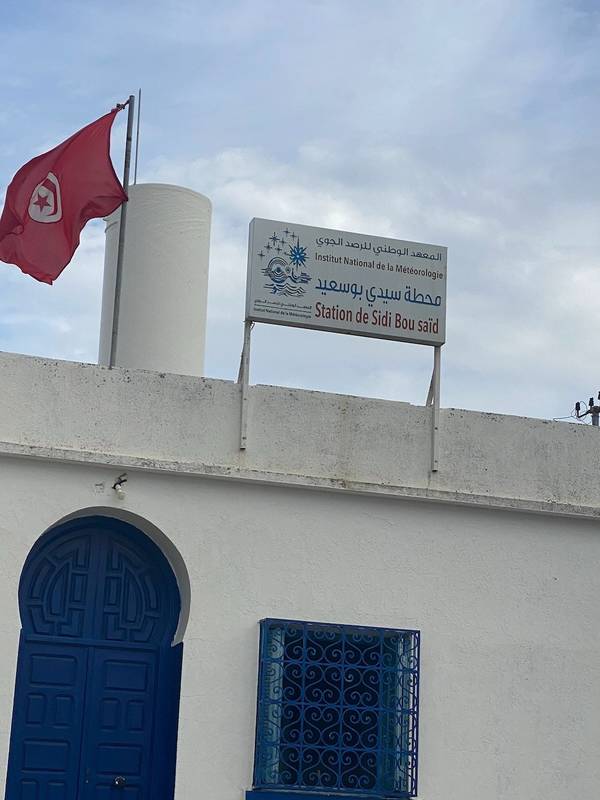
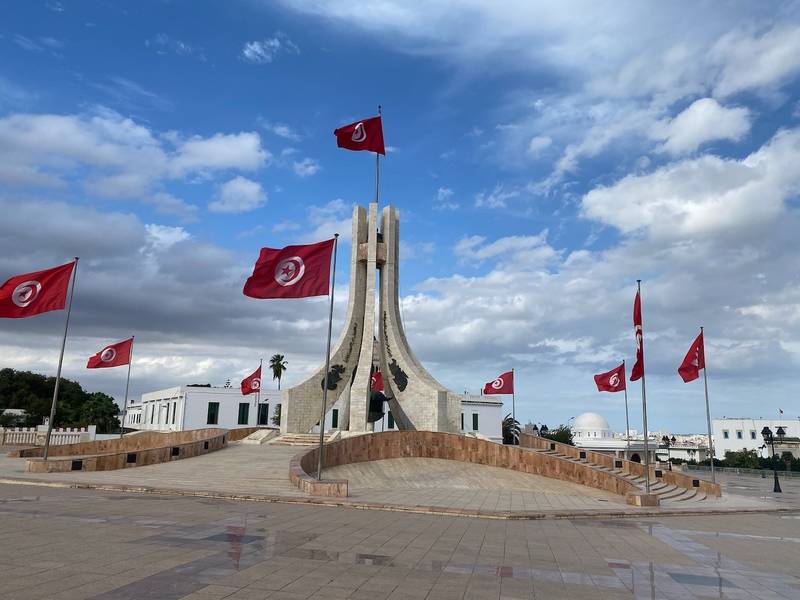
Kasbah Square, Tunis. In 1884, Tunisia was one of the first countries to abolish slavery.
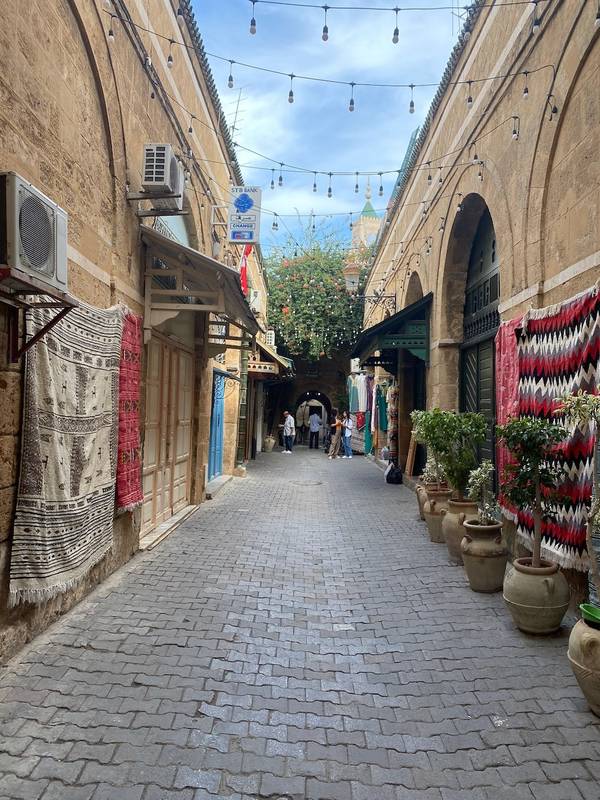
Street scenes in Tunis, a vibrant and bustling city with both ancient history and modern influences overlapping.

The beautiful patina of Tunis' cobblestone streets. These paths and walkways are thousands of years old. It's difficult to fathom the number of souls (soles!) who made their way, throughout history.

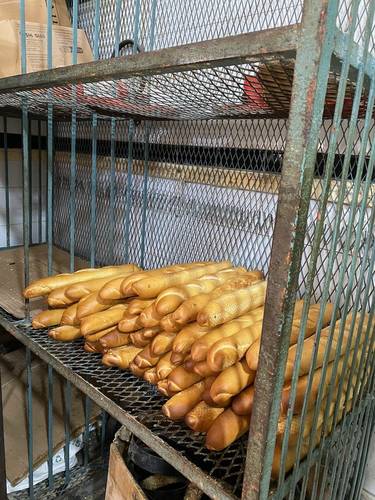
The every day art of a bread maker in Tunis.


This unexpected sign outside a public restroom, made me laugh out loud. We are all more alike than different, aren't we?.


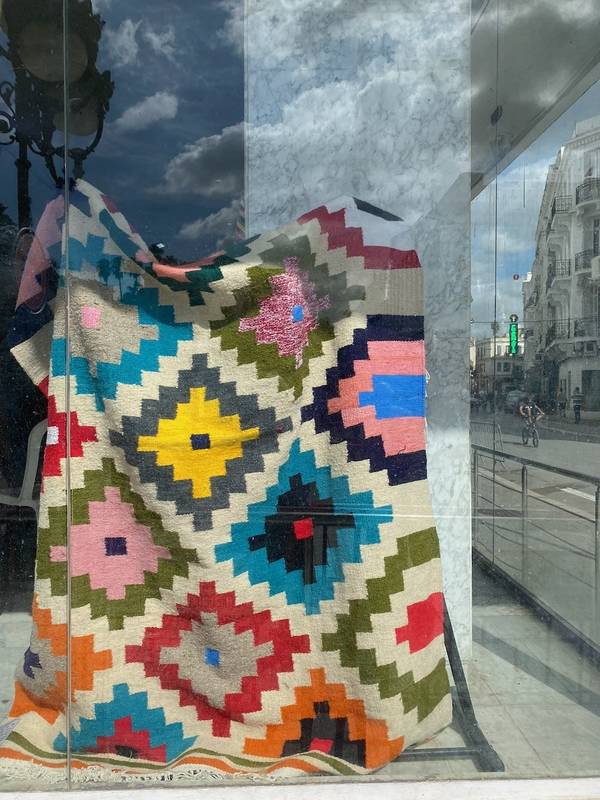
The beautiful and colorful hand woven rugs of Tunisia. My father bought several in Tunis and Kairouan, and sent them home to my mother. I grew up walking on those rugs, from 1/2 way around the world.

While in Tunis, there was a national election day, held every 5 years, to vote for the President of Tunisia. Here is Riad, our van driver, after having voted with his fingerprint. There are no mail-in ballots here (as in other African nations, home addresses really don't exist) - all voting is done in person, and there are polling stations at every school. We had an interesting discussion about the Tunisian government and politics that day. Riad, and our guide Monaam, predicted that the current President would be re-elected, and he was. However, the general opinion seemed to be that this president was competent to maintain the status quo, but lacked a vision for a more promising and innovative future. Only 30 % of the population voted, and of that, only 6% were "youth."
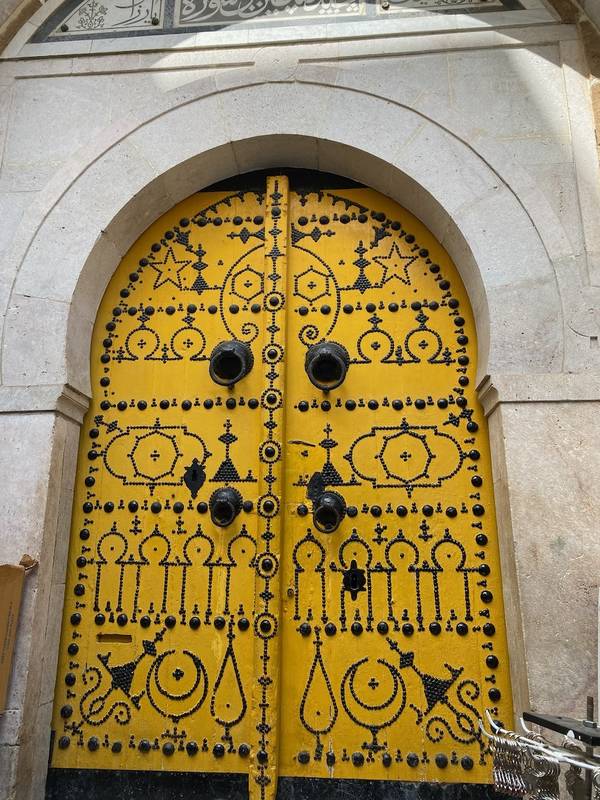
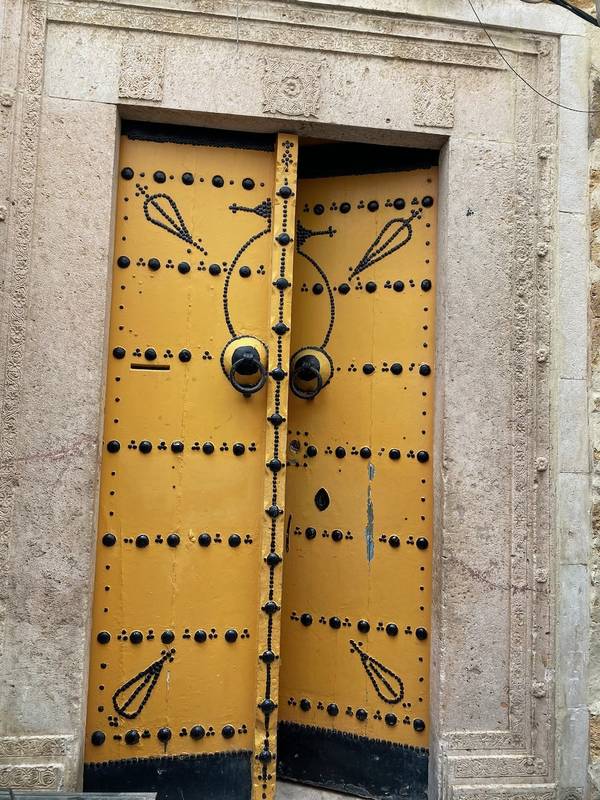
One of the many beautiful and interesting doors while walking the streets in Tunis. Who knows what lies beyond these fortresses of privacy? Most likely, there are lush courtyards and extended family compounds.


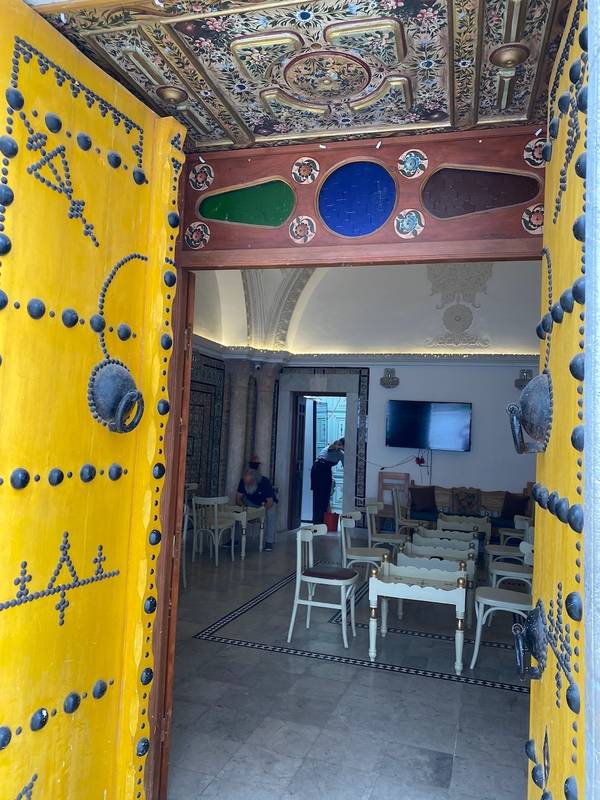

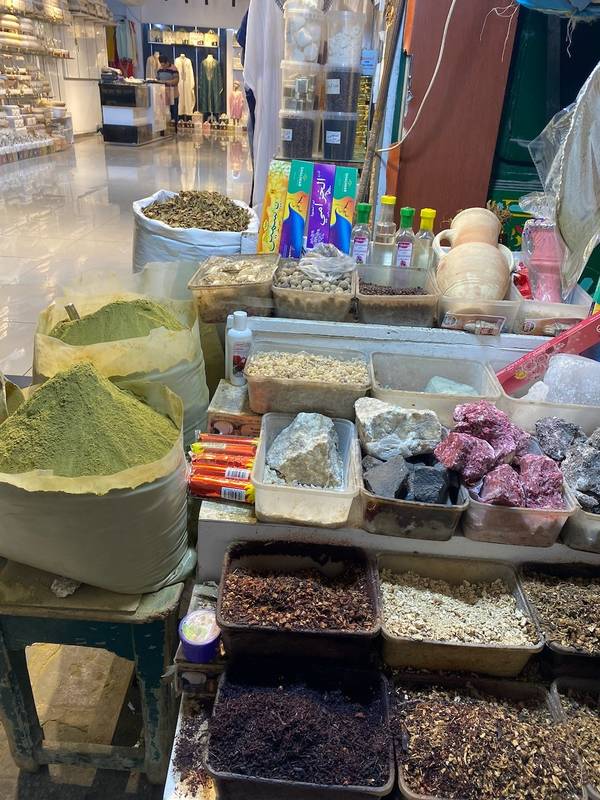
The bustling markets (souks) were a bit overwhelming, but so interesting and colorful.

Anything you could imagine, was for sale. Here are freshly ground spices and herbs.
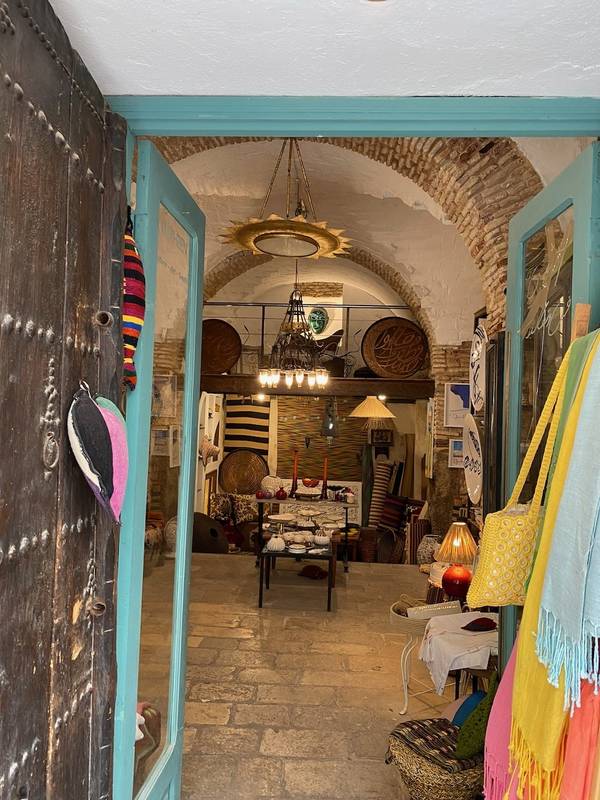
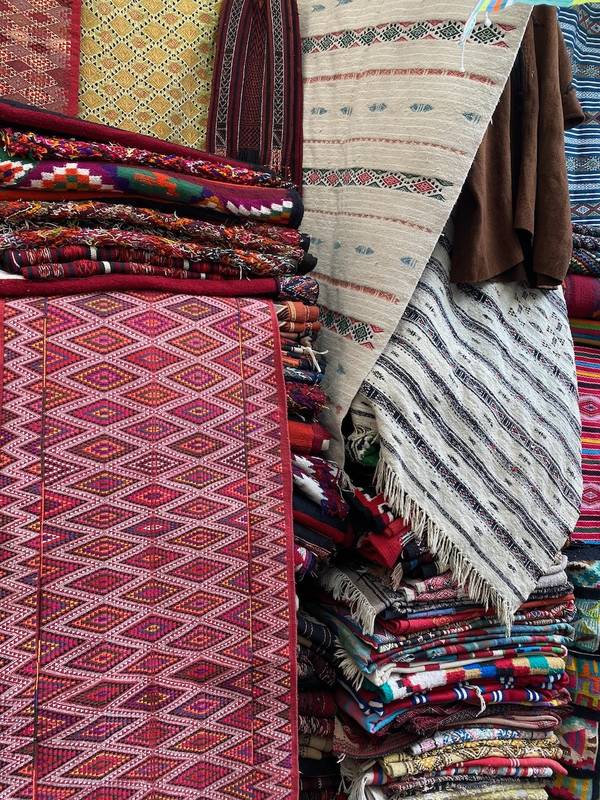
All of the handwoven tapestries and exquisite rugs were extraordinary. I bought a few to bring home. I grew up with "Arab" rugs my dad bought during WWII and sent home to my mother. He thought they were beautiful, but I'm not sure my mother fully appreciated their designs and historic significance.
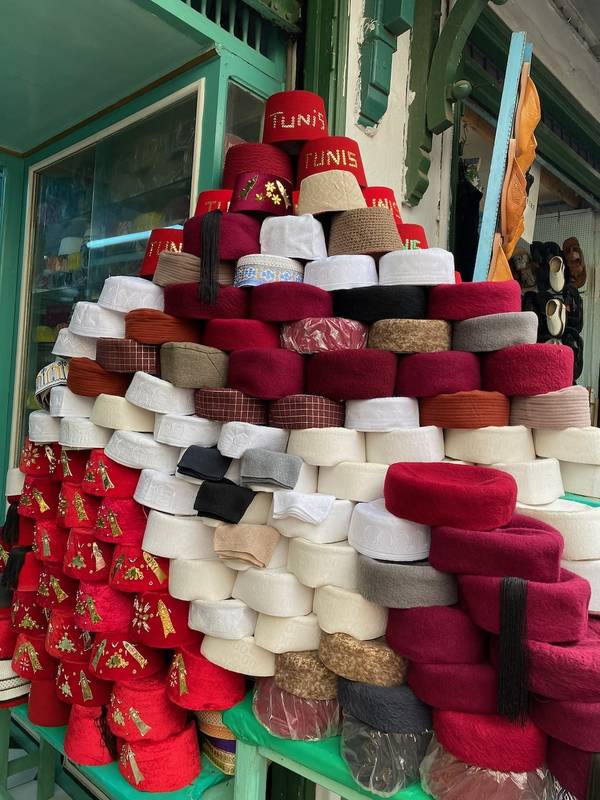
The “Chachia” is a flexible hat worn by men that originated in Tunisia and Libya. It is typically made from wool that has been crushed with hot water and soap, then dyed, and shaped. I noticed that these hats are now made in a variety of colors - even pink, probably to appeal to tourists.
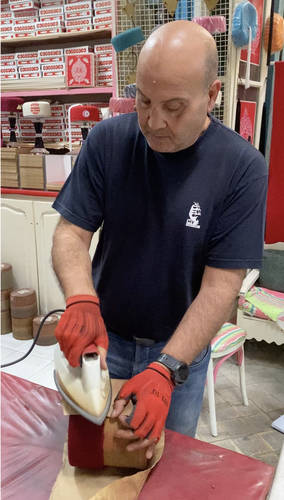
A shop owner in the process of making the ubiquitous red felt hats.

Our beloved/knowledgable guide, Monaam Triki. Monaam's passion for Tunisia, and its convoluted history, enriched our trip in so many ways.
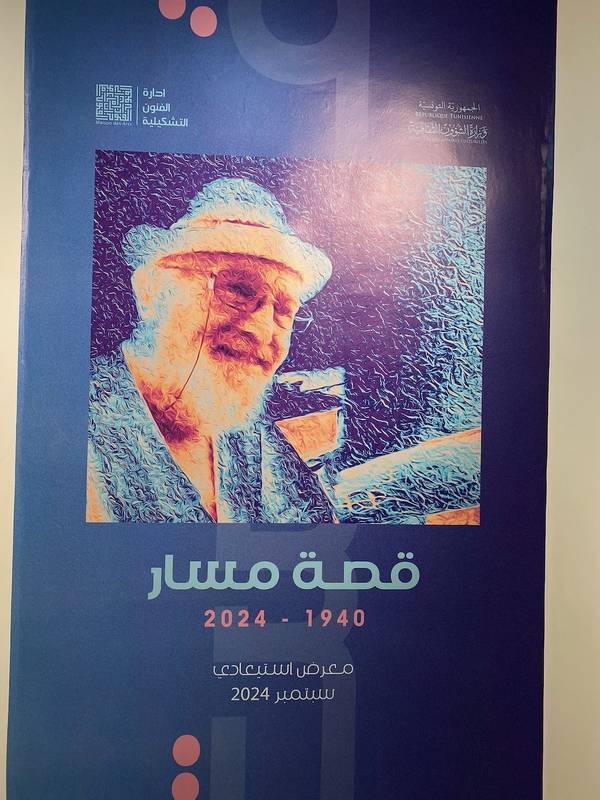
As I mentioned in the Intro, my trip to Tunisia was not all "business." One afternoon, we visited an art gallery, featuring this well-known/respected visual artists. I love his pieces, and wished I could have brought one home with me.
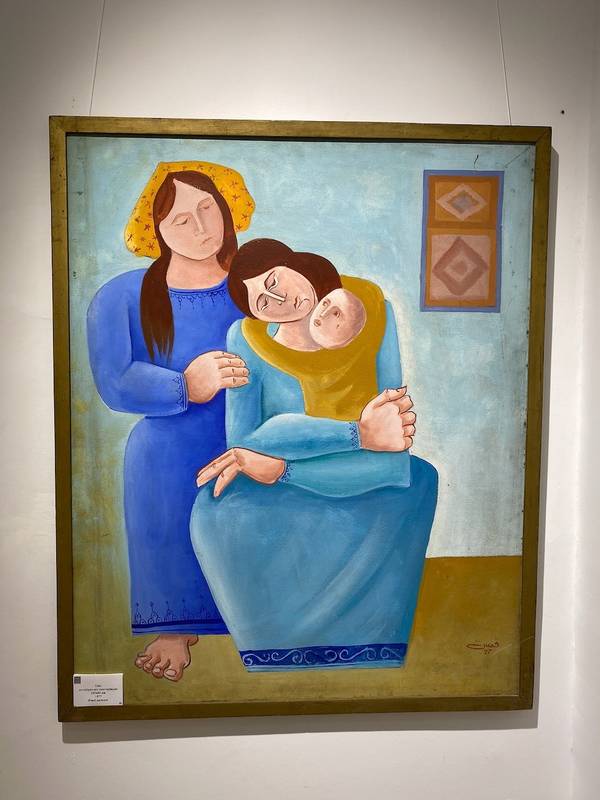


The artist, Sadak Gmache, wanted to correct traditional images of Tunisians, corrupted by the French.
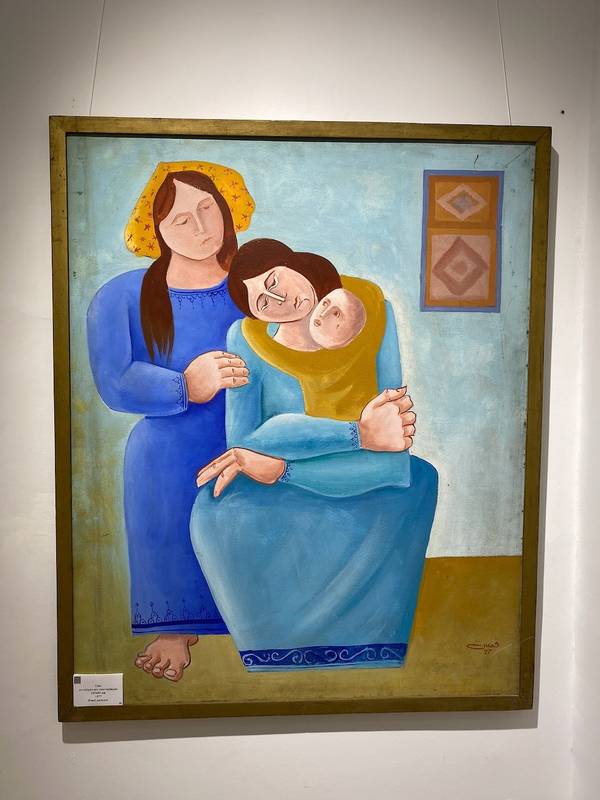
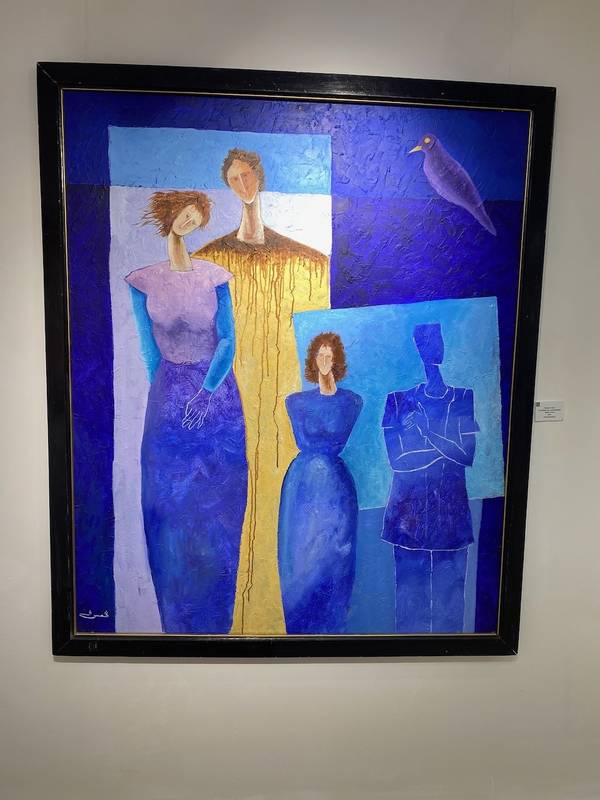
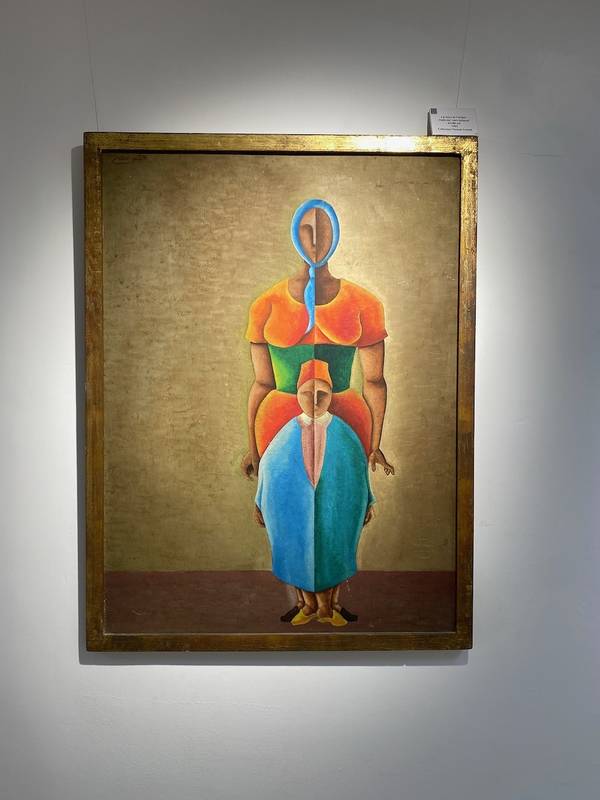

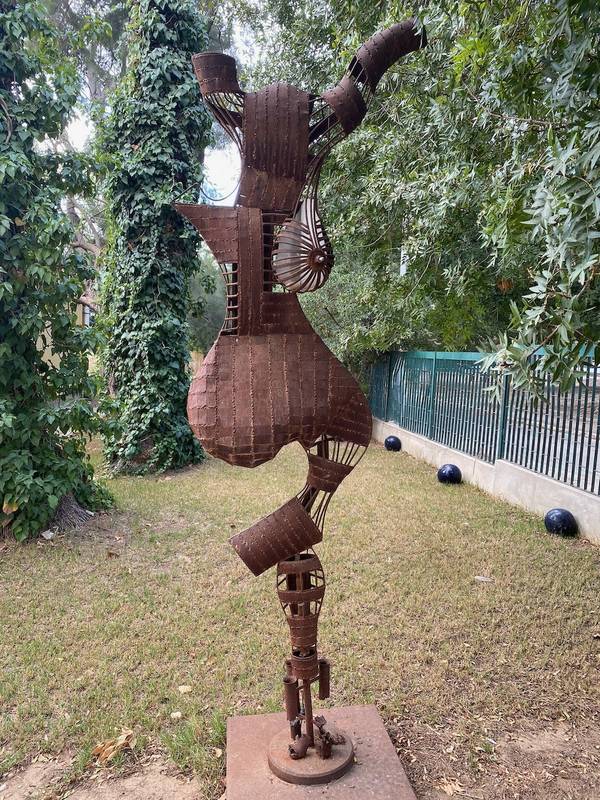
More images at the art gallery we visited. As I previously mentioned, the juxtaposition of Tunisia's ancient history/Roman ruins, bustling streets and souks, against more modern architecture and art galleries, was a challenging exercise in putting everything in context.


For most of its ancient history, Muslims, Jews, and Christians lived side-by-side in peace and harmony.
