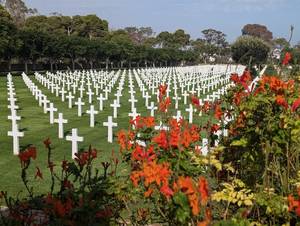
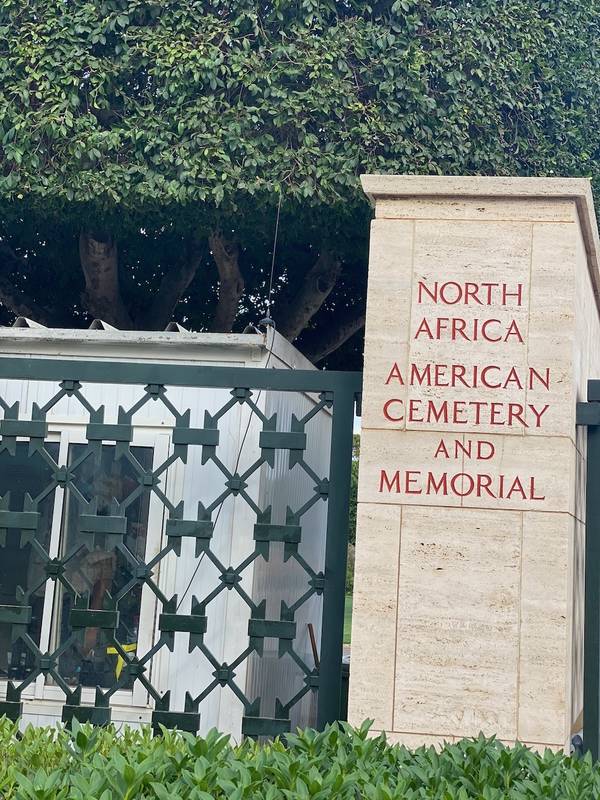
During WWII, taking control of North Africa, and primarily Tunis, was an early and necessary step for the Allied Forces, opening the way to Sicily, Italy, and eventually, Normandy. Thousands of American soldiers were killed during the bloody North African campaign and at the top of my bucket list, was to visit The North Africa American Cemetery and Memorial in Carthage, Tunisia. Its 27 lush acres, set amongst the ancient ruins of Carthage, is the final resting place for over 2,800 Americans. It also honors the 3,700 soldiers whose remains were never found.
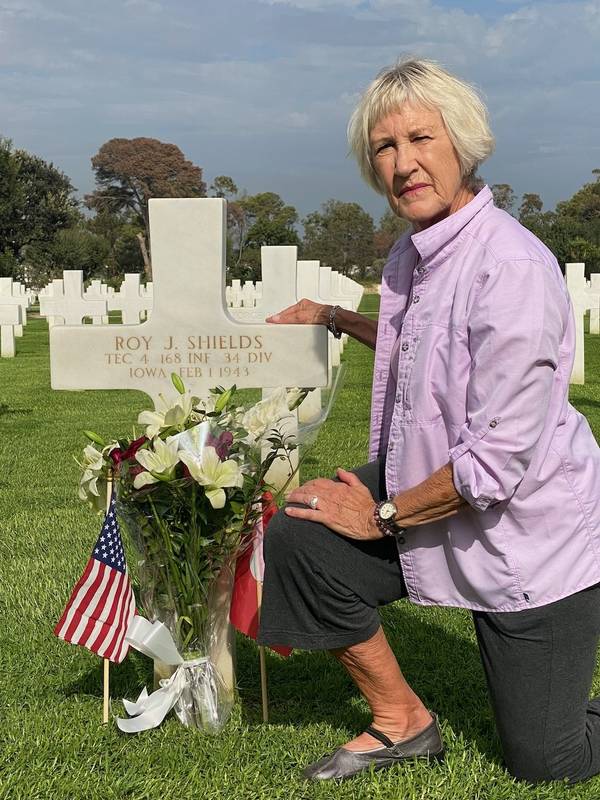
Amidst the thousands of graves, so perfectly aligned and tended to, I had a unique opportunity to personalize the experience. I was able to visit and pay tribute to the graves of two soldiers who served in my father’s 168th Regiment in North Africa:
Sgt. Gordon L. Watts from Iowa and Tec 4 Roy J. Shields.
The date of death of Sgt. Watts coincides with the dates of my dad’s service as a Medical Officer/regimental combat surgeon in the 168th Infantry, of the 34th "Red Bull" Infantry Division. This means that Sgt. Watts may have been treated for his injuries by my father -- I’ll never know. But, what I do know, is that placing flowers on both soldiers' graves amongst that vast sea or marble crosses, in gratitude for and in tribute to their ultimate sacrifice, was one of the most moving and humbling moments of my life. I felt not only their presence during the war over 80 years ago, but also my father's critical role in treating the wounded soldiers in his regiment.
“Time will not dim the glory of their deeds.” –General of the Armies, John J. Pershing
Posted June 06, 2026

The "3 Amigos," Peggy, Mary, and Susie, exploring North Africa.

A map depicting my "Daughter's Pilgrimage," a combination of a small group tour and my own foray into my father's battlefields.
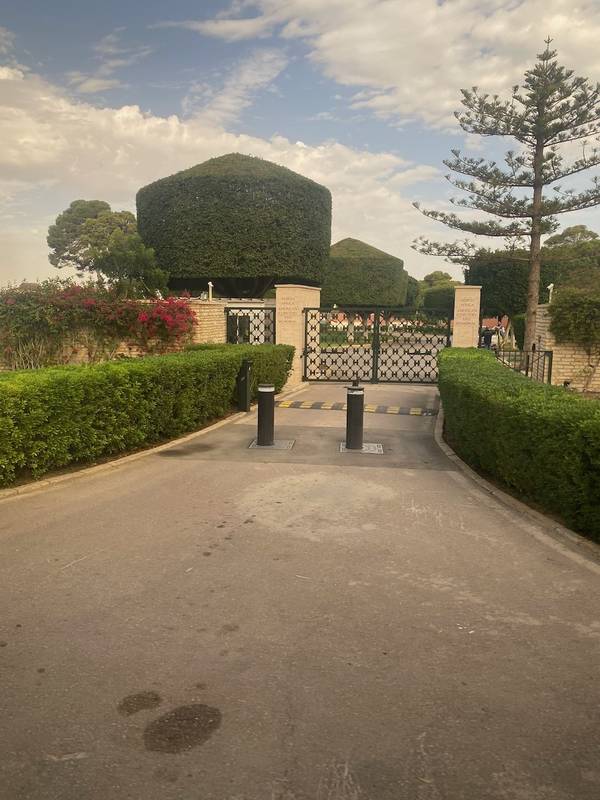
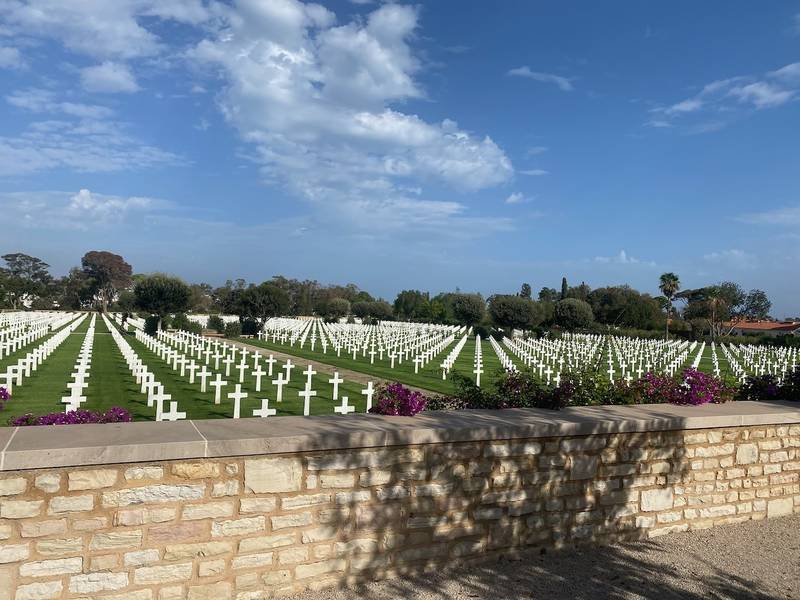
Gazing out over the thousands of graves so perfectly aligned and tended to, was humbling. Walking amidst these deceased soldiers’ marble headstones, who made the ultimate sacrifice for their country, I felt a profound sense of reverence, honor, and of course, sadness.
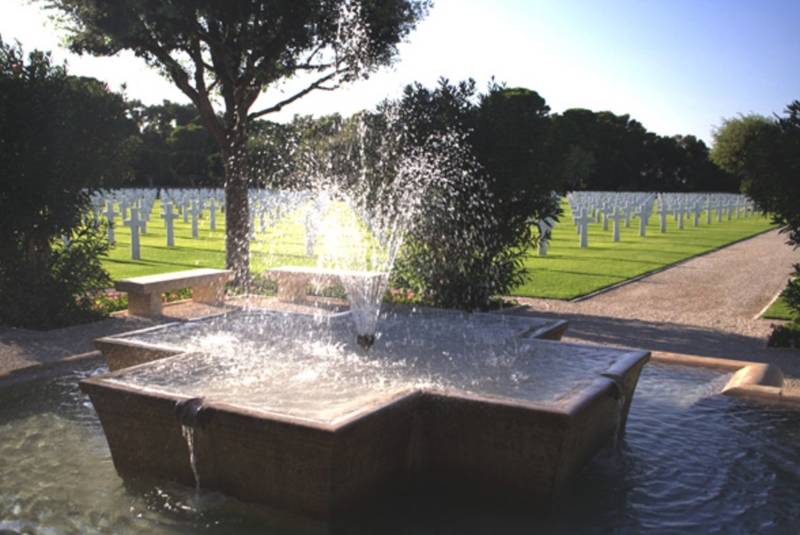
The cemetery’s beautifully manicured grounds, interspersed with cooling fountains, is a small oasis in the fierce Tunisian heat. The spray of the fountains points directly toward the white marble headstones and the memorial chapel.

"1941-1945: In proud remembrance of the achievements of her sons and in humble tribute to their sacrifices, this memorial has been erected by the United States of America."

In Arabic.

In French. North Africa has such a rich and tumultuous history
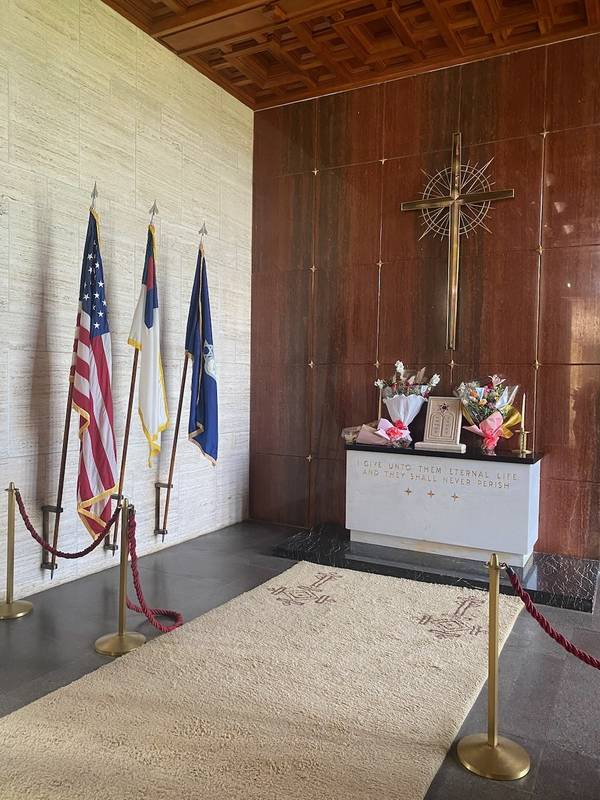
The chapel is a serene refuge of polished marble, flags, and sculpture. All signage at the cemetery is in English, Arabic, and French.


Canopied by trees, “The Wall of the Missing” holds panels of engraved marble tablets with over 3,700 names of those lost, but whose remains were never recovered.
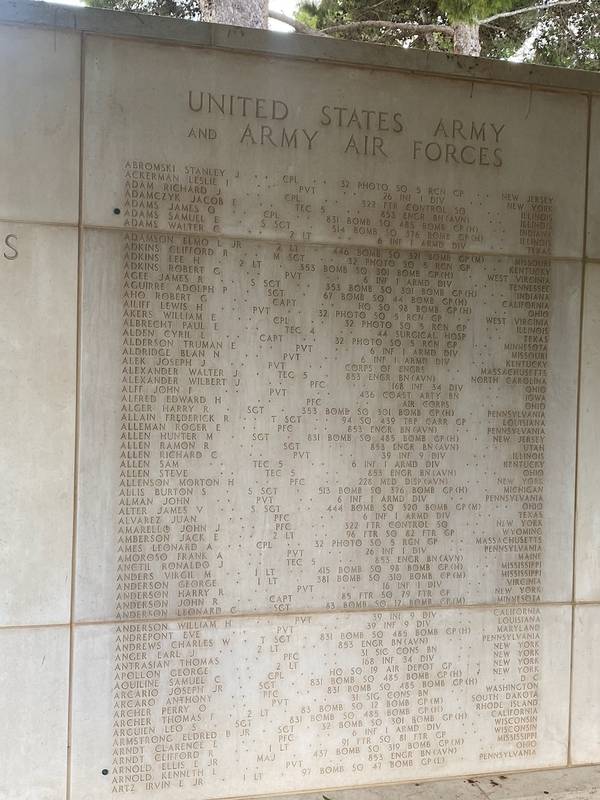
The Tablets of the Missing on arayed on a wall 364 feet long, that display names and particulars of 3,724 of those missing in service on land, sea, and air in the region.
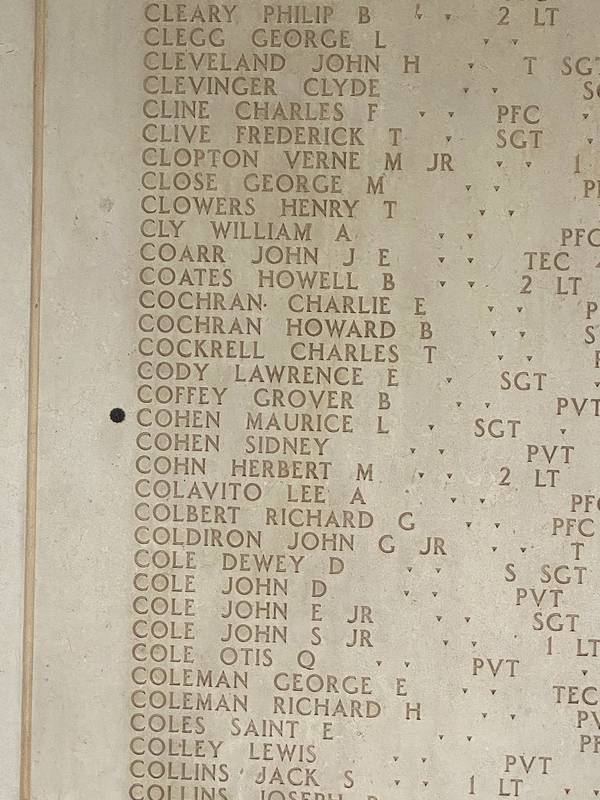
A rosette next to a name here and there, indicates that remains were recently recovered and identified.
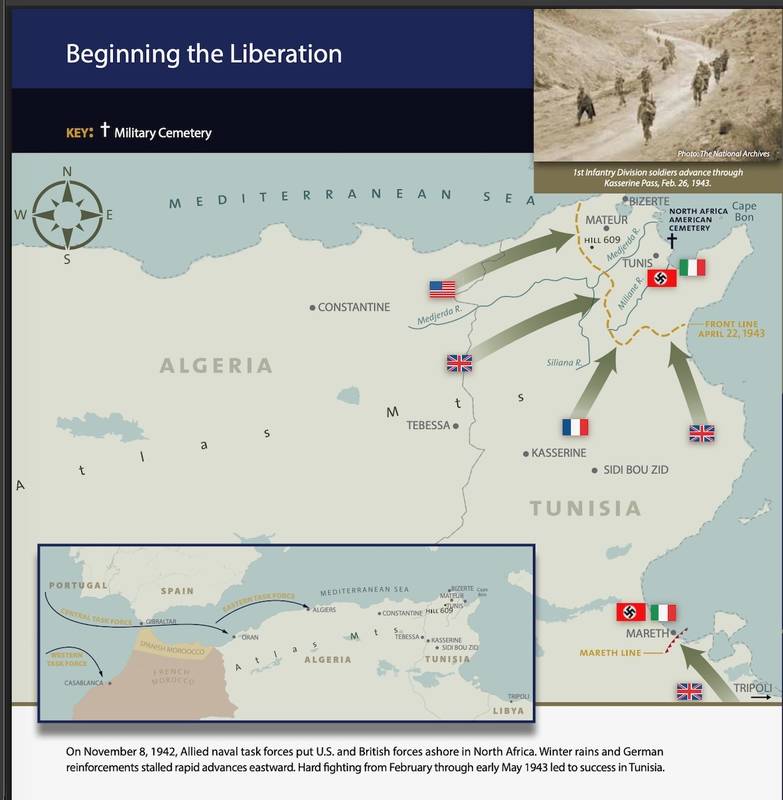
The Allied Forces North Africa campaign.

On the walls in the reception area, were large, beautiful maps in mosaic and ceramic tiles, graphically depicting the operations and supply activities of the British and American troops from the November 1942 landings to the Axis surrender in May 1943.
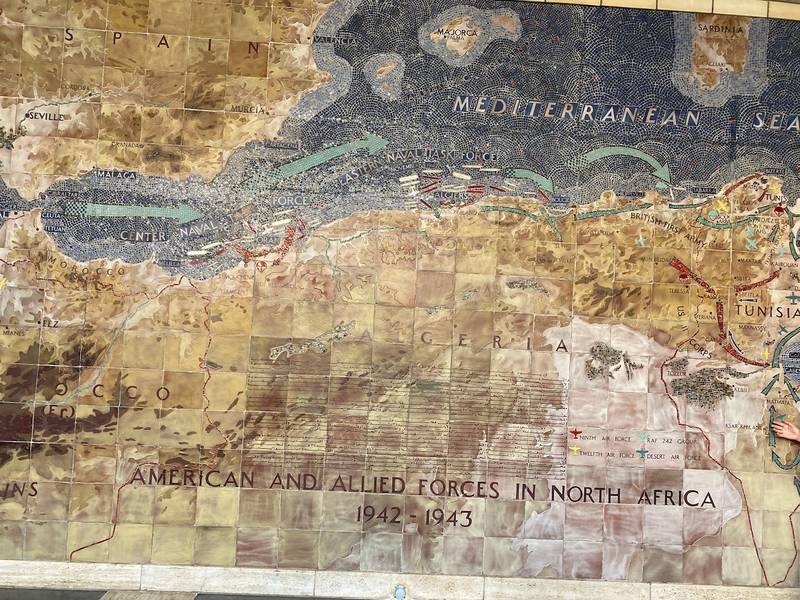
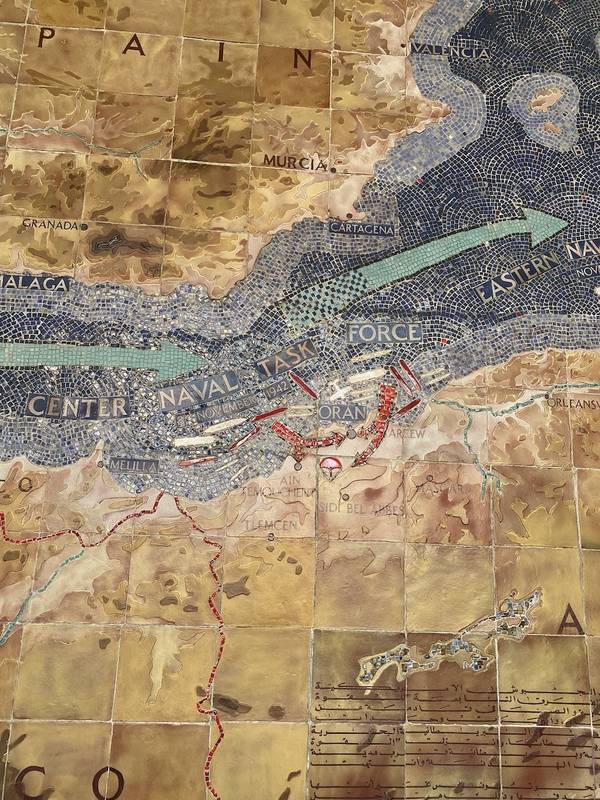
The visual impact of these 3-D maps was stunning.
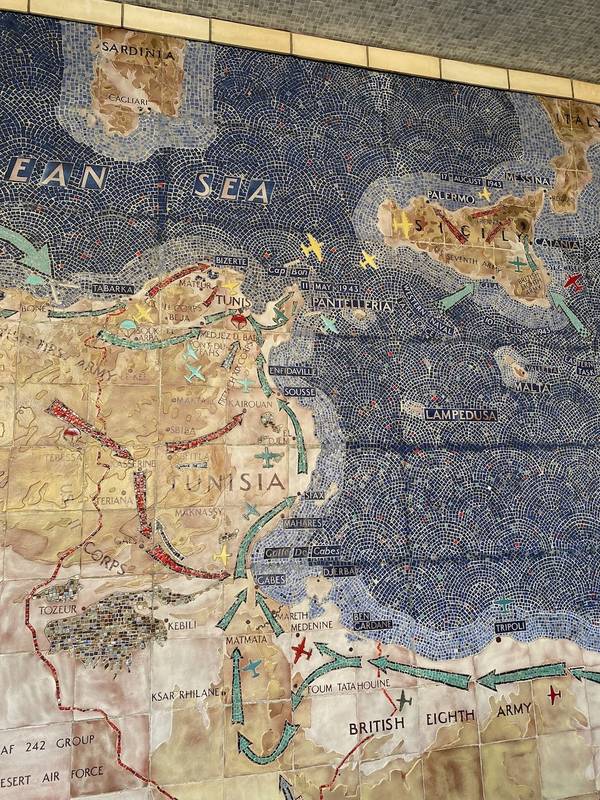
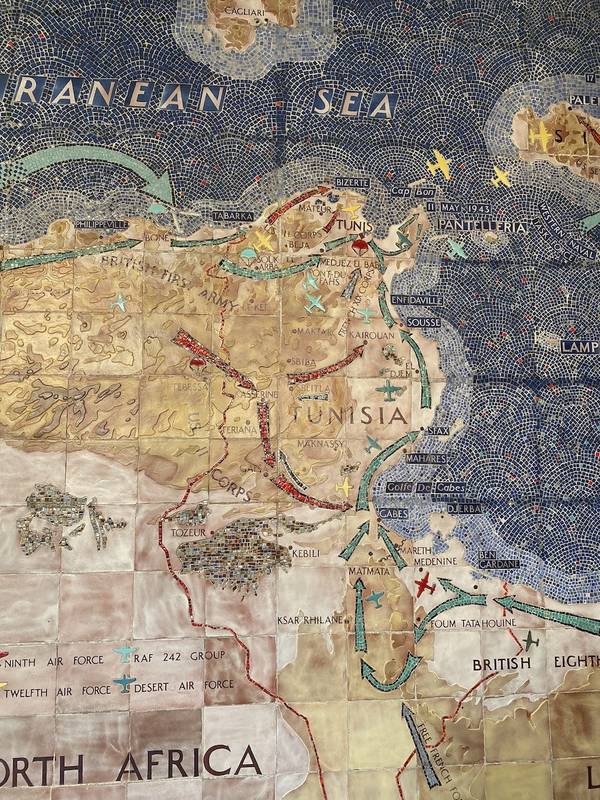
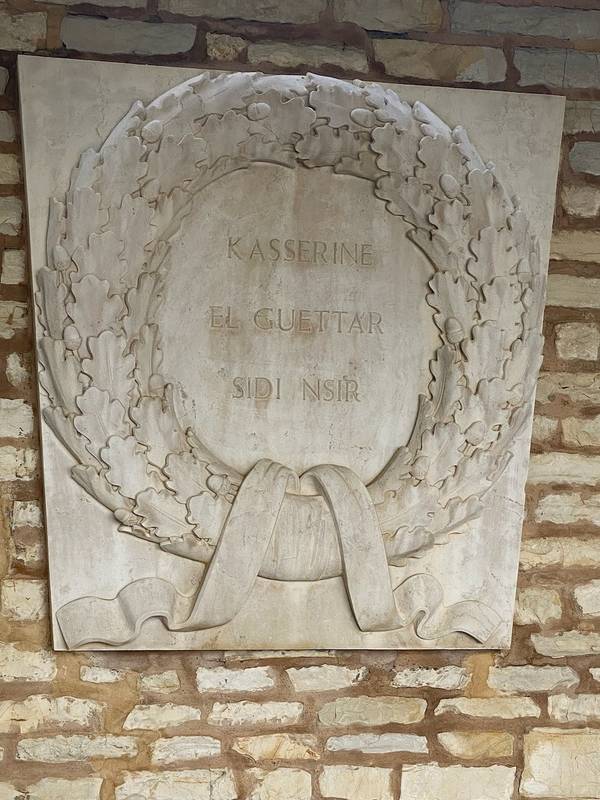
Major battles in the North African campaign. My father, Lt. Col./Maj. Arthur L. Ludwick Jr, M.D., participated as a medical officer and regimental combat surgeon in all of these.

This bomber and its crew got lost while flying at night and running out of fuel, they parachuted out. The plane wasn't found for decades. Some of the crew survived in the Libyan desert, but were in bad shape.
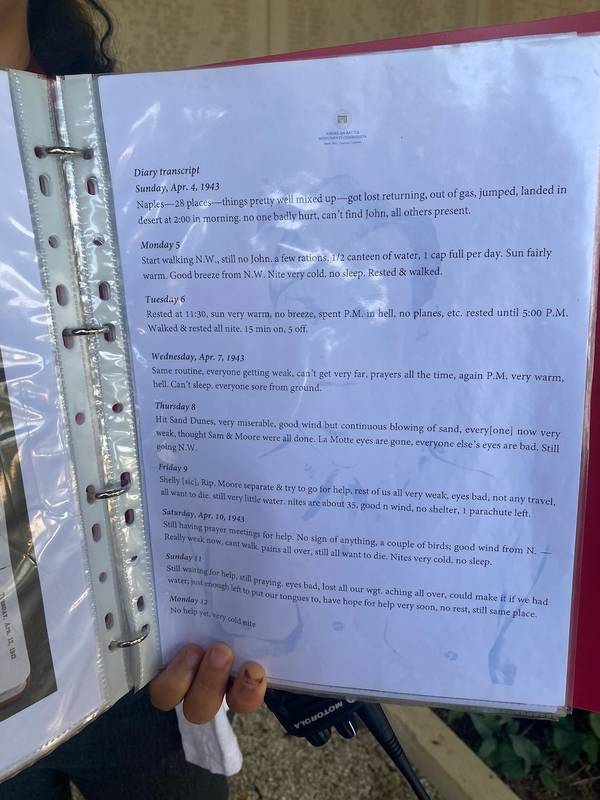
This is the diary transcript found with just 9 entries.
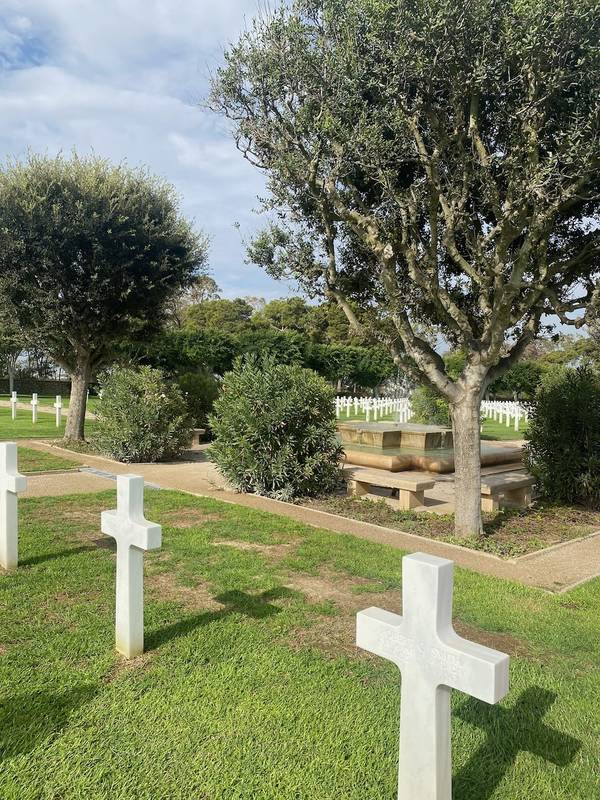

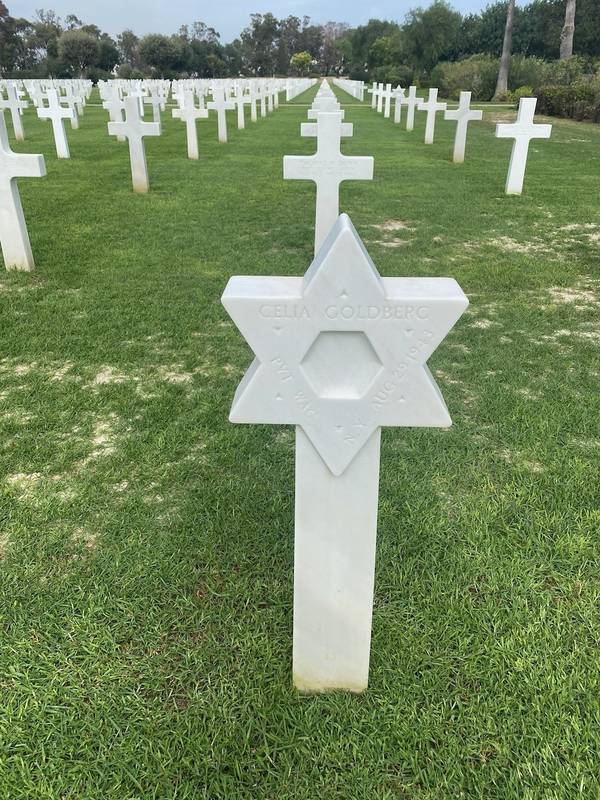
There were only a few Jewish graves. Defeating the Nazis must have been a very personal to these soldiers. mission.

Our wonderful guide, Monaam Triki, was instrumental in facilitating the purchase of flowers for the two graves we visited.

This groundskeeper had the utmost respect and careful attention to every detail in maintaining the graves. When I asked him how long he had been doing this work, he said, for 25 years - and that it had become his life's work.
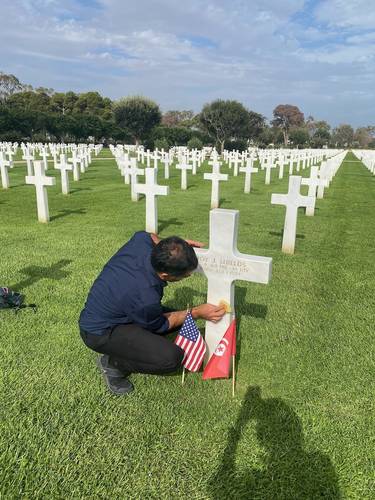
The cemetery groundskeeper prepares the grave for our visit.
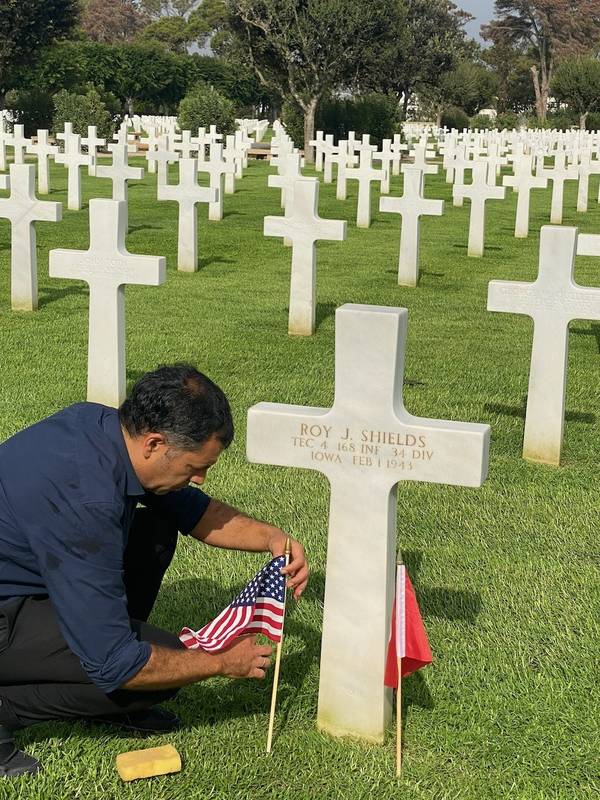
When a visitor asked to see a particular grave, this man would carefully rub wet sand into the engraved/recessed name so it would become more visible.