In February 1943, Captain Arthur L. Ludwick, M.D. (“Lud”) was thrust into the unforgiving theater of war in Tunisia, North Africa, where he was tasked with not only treating and caring for the wounded, but also with preserving his men’s emotional and psychological well-being. His accounts of those intense battles, where he worked tirelessly amidst the chaos and carnage, have been indelibly etched into my family’s legacy, as recounted in my book, 𝑨 𝑫𝑶𝑪𝑻𝑶𝑹’𝑺 𝑾𝑨𝑹.
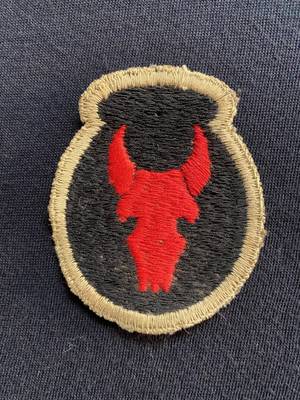
In Tunisia, the very real drama of war was about to unfold for the 34th “Red Bull” Infantry Division and my father’s 133rd/168th combat regiments. Even though they had “trained” in Northern Ireland for the prior ten months, they were untested in live combat and at a disadvantage with outdated WWI era equipment: weaponry, communications systems, and clothing.
In his book, Meeting the Fox, author Orr Kelly notes, in regards to the young soldiers seeking adventure: “Their imaginations did not prepare them for reality: high mountains, snow, cold, torrential rains, and mud so thick it would swallow trucks, jeeps, airplanes, and even tanks.”
These inexperienced National Guardsmen from the middle of Iowa, were amongst the first American troops to engage with German General Rommel’s, (the Desert Fox) highly trained Afrika Korps army and its double threat of panzer attacks and dive- bombing Stukas. Their first two encounters with the enemy, were disasters.
As the 34th Infantry Division moved eastward across North Africa to Tunisia, they learned hard-fought, costly lessons. These were some of the bloodiest and most intense battles of the entire North African campaign, but eventually, both the 133rd and 168th regiments became fine-tuned combat machines against a backdrop of brilliant poppy fields and cactus patches.
Posted May 11, 2026

My father served in both the 133rd and 168th Infantry regiments, which were comprised almost entirely of Iowa National guard units, and became part of the the 34th "Red Bulls" Infantry Division. The U.S. Army’s celebrated 34th Infantry “Red Bull” Division, were the first U.S. troops sent to Europe after the bombing of Pearl Harbor. The 34th holds the U.S. Army record for most days in combat, over 500, in American military history.

The 34th’s first two engagements with the highly trained German troops in NA were a disaster, resulting in heavy casualties and over 1,000 Americans taken as POWs. The US troops were not only poorly trained, but also were lacking in the latest weaponry and communications equipment. The German ‘88’ was a much-feared, high velocity, hard-hitting large-bore cannon with great superiority to any such weapon in the American arsenal. From even 5 miles away, the 88 shells traveled so low and fast, arriving ahead of their sound, soldiers didn't have time to take cover.

This is an Emergency Medical Tag (EMT) that all field medics carried with them to attach to dead body and/or wounded soldier waiting to be evacuated.Details of this are in book: note Diagnosis on EMT: “KIA decapitation, high explosive shell fragment.” This refers to a soldier hit by the ‘88 at point blank range, which my dad reports on in the book.)

In March 1943, the rains were so incessant that all war operations had to cease. The primitave dirt roads became too muddy for transporting troops and equipment.

June, I943: North Africa: "The picture is one that Geo. Coulon (one of the boys I brought with me from the 133rd) took during the last big push around Sidi Nsir. It was taken at the 2nd Bn. Aid Sta. which I had dropped in on about something. At that time it was about 3 miles behind the lines, but they moved to the front the next day. The officer is Capt. Moses Cohen, my 2nd Bn. Surgeon.

One of my favorite photos of my father, in deep thought in his medical tent, somewhere in North Africa. Note his ever-present typewriter, and medical trunk.

This little Tunisian boy, who hung around my father's medical aid station, captured his heart. See typed caption on back of photo.

Lud's typed caption on back of photo of little Tunisian boy.

August 1943? From one of Lud's letters: "A French Senegalese soldier that wandered into our area one day up near Gertie's place. (Bizerte, Tunisia?) He said he had five wives and was allowed seven if he could provide for them. He had the widest grin you've ever seen and he grinned all the time. He certainly did spruce up when he found he was going to have his picture taken."

Lud’s canvas Musette bag (“rucksack”) and contents that he carried onto the battlefield to treat the wounded.


Lud’s surgical field tool kit in canvas pouch that he carried with him in his Musette bag.