
Carthage today is a unique fusion of a world-renowned UNESCO World Heritage archaeological site, and a wealthy modern residential suburb of Tunis. It is distinct for being the physical ground where over the course of thousands of years, 14 different powerful civilizations layered their history.
Our Tunisian guide, Monaam, explained to us, that Carthage is “an idea” – where one can live in peace and respect amidst a diverse population. "It’s similar to NYC,” he went on to say. “It’s a melting pot of many different cultures and religions, that have co-existed for centuries." However, Monaam also indicated that Carthaginians, and Tunisians in general, have an identity crisis with no unifying allegiance, due to its history of constant colonization by invading forces.
There is no separation of church and state in North Africa. 99% of the population is Muslim and that ideology is seamlessly fused throughout the government. The government appoints the mosques' Imams, or leaders/guides, and scripts their sermons and congregational prayers.
Women’s Rights: Tunisians consider themselves to be more liberal and tolerant than their neighbors, given equality laws instituted in the Tunisian constitution by the country’s first president Habib Bourguiba in 1956. They enforce some of the most progressive laws on women’s rights in Musilm majority countries.
Today, women have the right to work, ask for divorce, run their own business, and have access to birth control and abortion. Additionally, women are free to choose to wear the traditional Muslim head covering, the hajib. In fact, most urban women dress in Western clothes and do not veil themselves. However, outside of urban areas, local life is much more traditional.
Yet, despite Tunisia’s forward progress, patriarchal values still dominate the land. One of the most controversial topics of women’s rights in Tunisia, are the inheritance laws, a subject of great consequence to the progress of women’s rights in the Arab world. As it is written in the Quran, a surviving son is entitled to twice the share of a surviving daughter.
Posted June 21, 2026
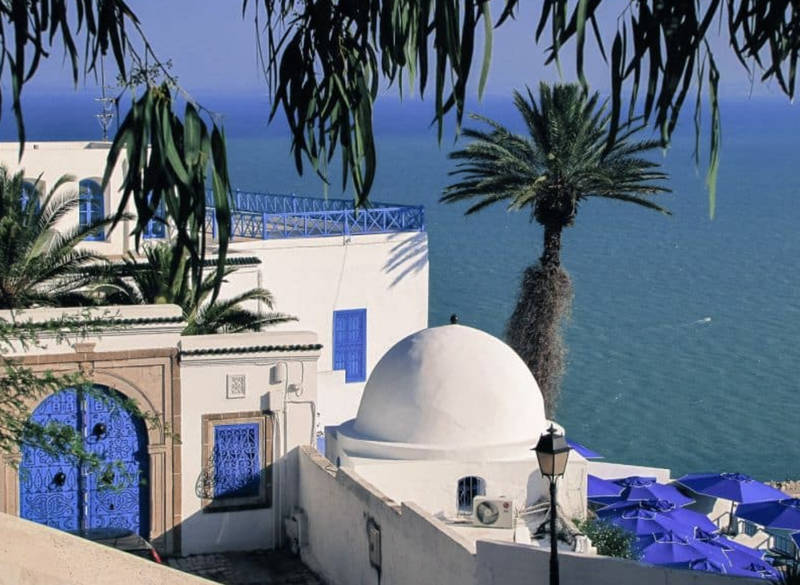
The lovely neighboring cliffside village of Sidi Bou Said that overlooks the ancient ruins of Carthage. The famous blue and white theme is thanks to a French artist and musicologist named Baron Rodolphe d’Erlanger, who loved the Mediterranean aesthetic. In the 1920s, he championed the blue and white theme to unify the hilltop village.

The Baron helped establish a decree requiring all buildings to match.
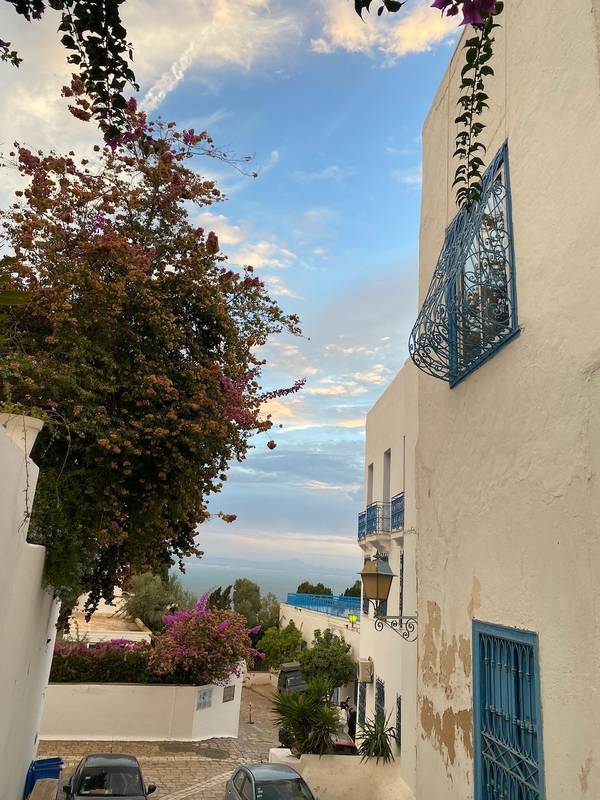
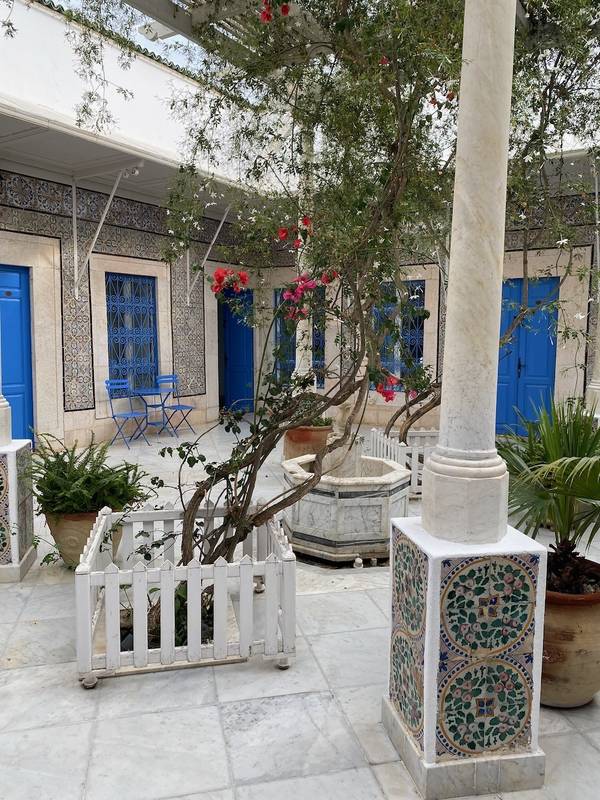
The blue and white of all buildings also has practical reasons. Historically, locals used white lime-wash on their walls to reflect the scorching North African sun and keep their homes cool.

The bright blue was used on shutters and doors because the specific pigments helped protect the wood against the salty sea air – and acts as a natural deterrent to mosquitos and other insects!

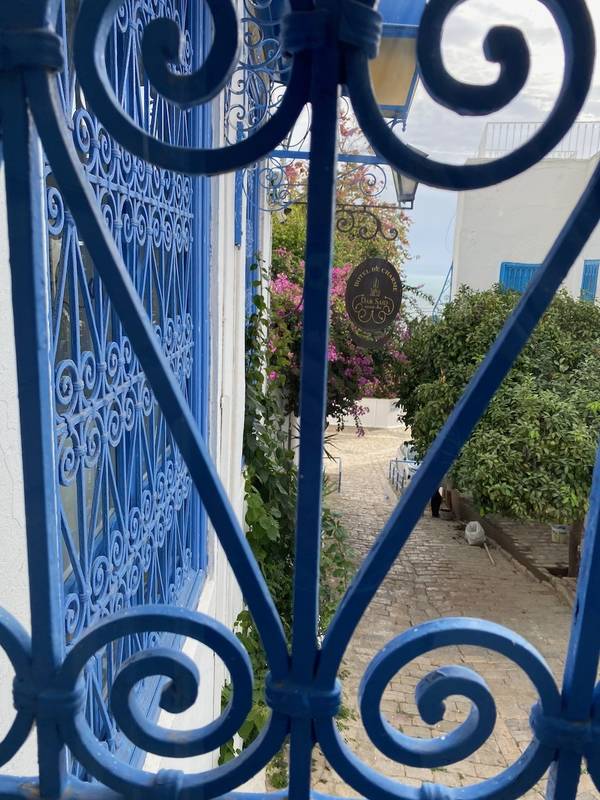
At our lovely hotel in Sidi Bou Said. What a beautiful view we had of the exquisite Mediterranean Sea. My father swam in that Sea over 85 years ago during WWII.

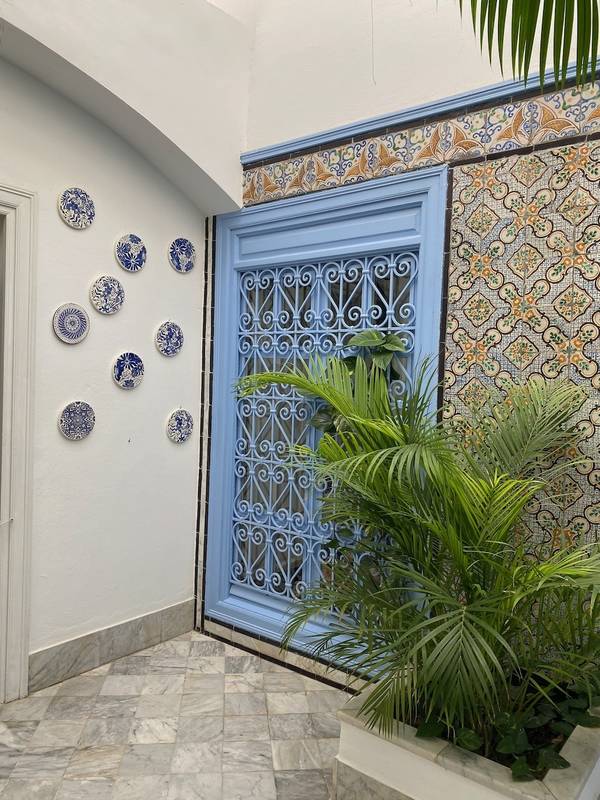
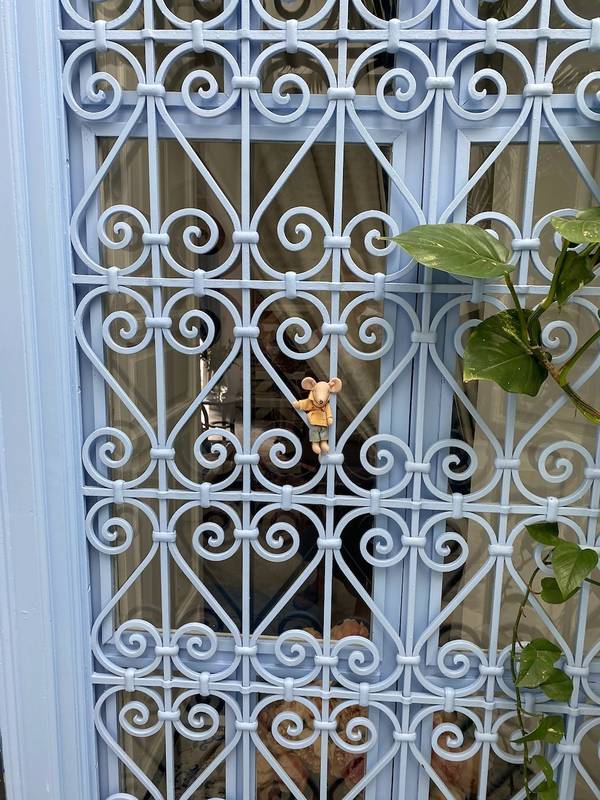
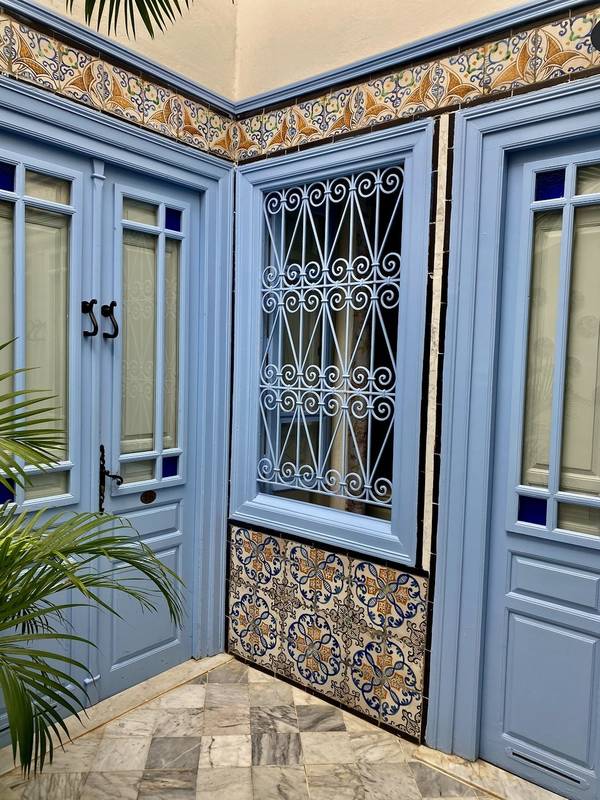
The blue and white in our lovely hotel.


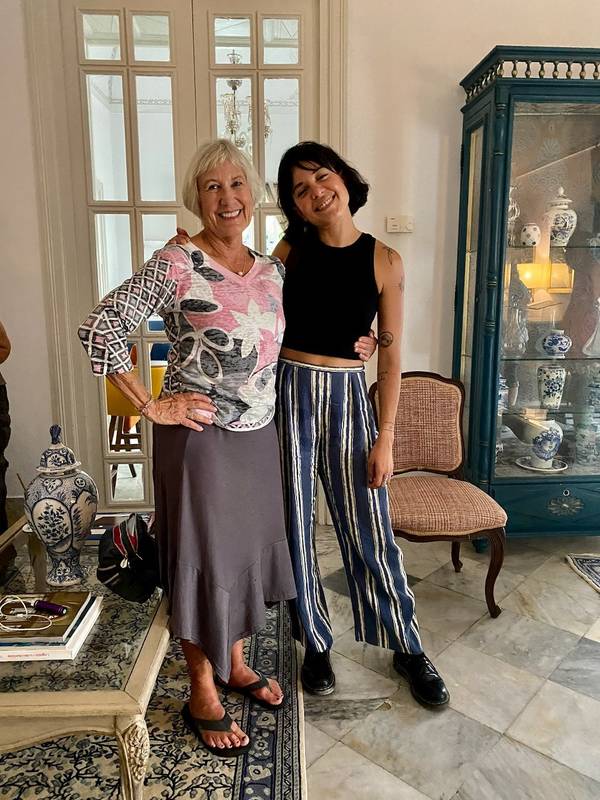
We enjoyed our 2-hour long discussion with this young modern Tunisian woman, “Shams” (which in Arabic means “sun.”) She had some tattoos, wore very contemporary clothing, no headdress, and teaches Political Discourse and History at The University of Bourguiba. Habib Bourguiba was the first President of Tunisia after gaining independence from France in 1956. Tunisians refer to him as “our women liberator.”

A "traditional" yet "modern" wedding in Sidi Bou Said.


On his 40th birthday, Mark Zuckerberg posted photos on social media in which he wore a T-shirt with the words “Carthago delenda est," meaning “Carthage must be destroyed". This is a famous quote from the Roman statesman Cato the Younger, who used it to advocate for the complete annihilation of the city of Carthage, a historical rival of Rome.

Caesar Augustus (63 BC – AD 14), known as "Octavian" before he became emperor, was the first and among the most important of the Roman Emperors. As such, he has frequently been depicted in literature and art since ancient times. Mark Zuckerberg and his wife, Priscilla Chan, spent their honeymoon in Rome. Additionally, they named two of their three daughters, August and Aurelia, after the Roman emperors Augustus Caesar and Marcus Aurelius. Their first daughter is named Maxima, a twist on the Latin name Maximus.

El Abidine Mosque in Carthage. About 99% of the population in Tunisia identify as Muslim. Practicing Muslims are expected to pray five times daily: dawn, noon, afternoon, sunset, and evening. The exact time is listed in the local newspaper each day. The call to prayer, called the ezan, is sung or broadcast from minaret towers to remind the faithful that it is time to pray. Friday is the Muslim Sabbath, and some businesses close during this time.

While visiting a mosque, it is polite and respectful to be modestly dressed, (no bare shoulders, no short skirts or shorts). You will be asked to remove your shoes before entering.